
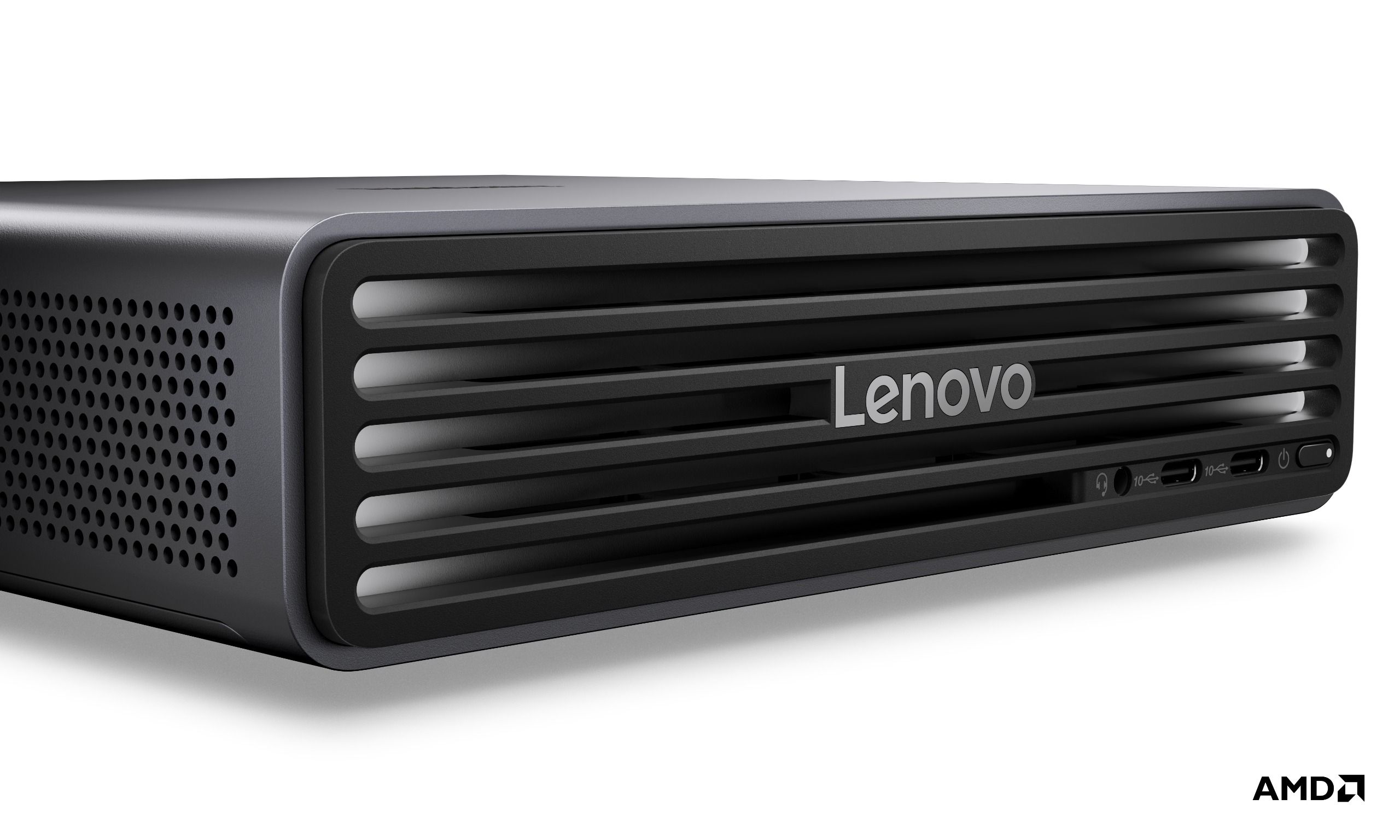
Lenovo capped the ThinkCentre X Ultra at 128GB on a chip that supports up to 192GB, but you can interlink four of them together. The company calls this offering a new class of desktop for agentic AI, and it can be configured to cluster up to four systems, effectively pooling processing power and memory to run large AI models locally.
What happened
This is still a developing thread, so the useful part is knowing which source signals are hardening and which ones still need caution. With devices, practical impact usually shows up in battery life, heat, stability, and long-term usability rather than in a few flashy headline numbers.
Where the sources line up
The company calls this offering a new class of desktop for agentic AI, and it can be configured to cluster up to four systems, effectively pooling processing power and memory to run large AI models locally. The added compute and memory capacity lets users run longer context windows and multi-agent workflows without turning to cloud-hosted alternatives, while keeping data localized.
Practical impact for readers
The Ryzen AI Max+ PRO 495 is the flagship of AMD's Gorgon Halo refresh, pairing 16 Zen 5 cores with a 40-compute-unit Radeon 8065S integrated GPU and an NPU rated at roughly 55 TOPS. Its defining trait is the shared memory pool: the CPU and GPU address the same LPDDR5X memory under the hood, so it can effectively hold and run models that a discrete, consumer-grade GPU with 24GB or 32GB of VRAM cannot.
Who should pay attention now
Lenovo pairs it with its enterprise-class ThinkShield security, AMD's PRO technologies, and DASH out-of-band manageability, plus the self-healing BIOS that runs across the ThinkCentre line, and integrates the AMD Ryzen AI Developer Center for preconfigured tools, models, and workflows across both Windows and Linux. The next step is to see whether the current signals harden into a durable change or fade as a short-lived experiment. That is why the useful reading move is not to stop at the headline, but to compare the promise, the workflow change, and the likely cost before deciding anything.
What is still unclear
The Yoga laptops unveiled alongside it also reach 128GB of unified memory, but they don't offer the ability to cluster together for more memory or the additional hardware you may not need for a localized AI server. The price might be an issue for many looking to hook up four of these devices together however, assuming a device cost of $3700 for a 128GB model, one would need nearly $15,000 before factoring in connectivity costs to build a 512GB memory cluster based on the ThinkCentre X Ultra.
Latest comments
0No comments yet. You can start the conversation.